
The most dangerous attacks on your environment aren’t loud. They’re the ones your tools never flagged — and your team never knew to look for.
What Your Security Stack Doesn’t Tell You
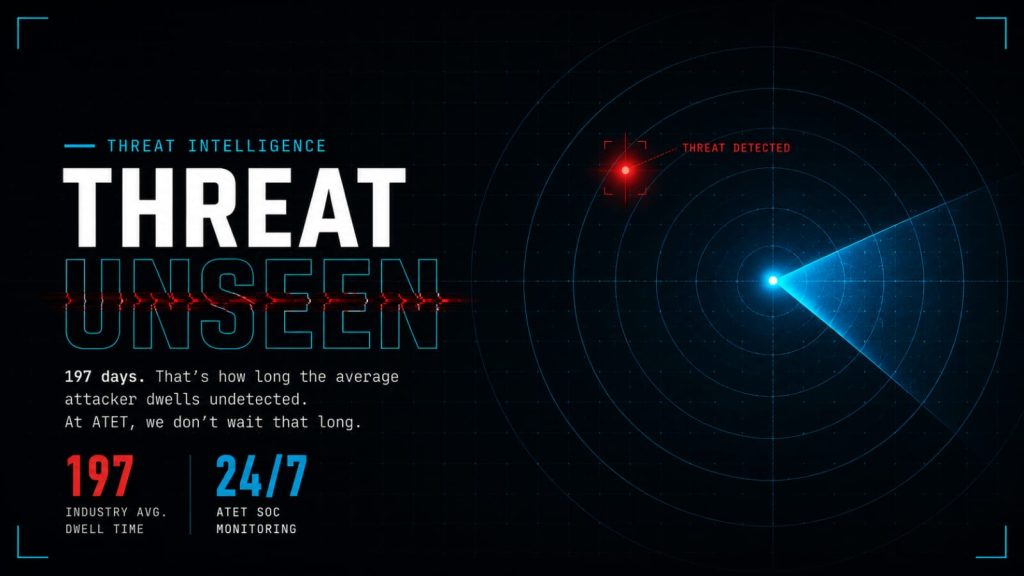
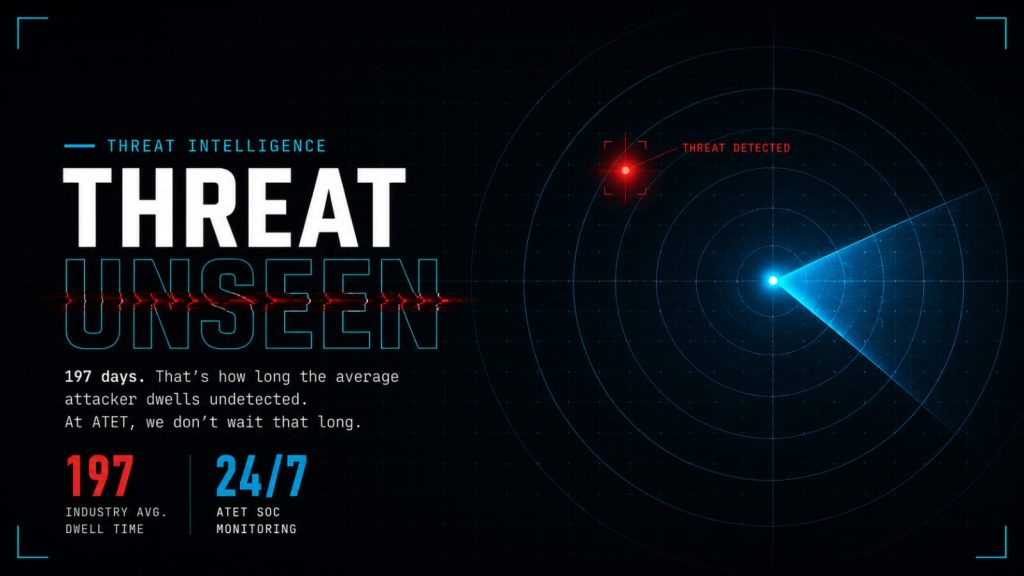
Every security team assumes their controls are working. Firewalls up. SIEM green. EDR deployed. The problem is that sophisticated attackers don’t break through defences — they step around them. The average attacker dwell time before detection is 197 days. That’s nearly six months of silent reconnaissance, credential harvesting, and lateral movement inside your environment — completely invisible to standard monitoring.
Why Your Tools Miss It
Rules-based detection is backward-looking by design. It catches what it has seen before. Advanced threat actors know this and exploit it deliberately. They use legitimate tools already present on your systems — PowerShell, WMI, PsExec — so alerts rarely fire. They spray passwords at a pace calibrated to stay under lockout thresholds. They enter through trusted third-party connections your perimeter never questions.
The result is a detection gap that no dashboard will show you. Your tools report green. Your environment is not clean.
Closing the Gap
The answer isn’t more tools. It’s better detection logic.
Behavioural baselining flags deviations from normal activity — not just known signatures. When a service account that has never logged in after hours suddenly does, that’s the signal. Threat hunting takes it further, operating on the assumption that you’re already compromised and proactively searching for attacker presence rather than waiting for an alert. Regular penetration testing then validates that your controls actually work — not just that they’re deployed.
For organisations under MAS TRM or PDPA obligations, this isn’t optional. Demonstrable detection capability is a compliance requirement — and a gap here invites regulatory scrutiny well beyond the breach itself.
197 days is the industry average. It is not ours.
At ATET, our managed SOC operates 24/7 with continuous behavioural monitoring, active threat hunting, and rapid incident response. We don’t wait for threats to surface — we go looking for them. By the time most organisations know they have a problem, we’ve already contained it.
Speak to our team at www.atetsecurity.com.